Visit BlogAdda.com to discover Indian blogs Content & Communications-Vipin Labroo

Tuesday, November 1, 2022

Indianisms we Indians could do without when speaking or writing English

Pexels Photo


At 125 million people, India has way more English speakers than the United Kingdom, the original home of English and is only second in the world after the United States which has the most English speakers in the world at 283 million. The English language has been around in our country for a couple of centuries now and despite being a language imposed upon us by a colonial power it has more or less served us well. 


Access to and knowledge of English has provided a bridge to the best of Western education to Indians allowing us to rise across sectors and industries on a global scale. As we often recall with pride many of the leading global CEOs across industries are Indians. Now one of us, has become the Prime Minister of the United Kingdom, our erstwhile colonial masters. 


Some of the very best writers in English have been Indian, many of them being Booker prize winners. There is no doubt about the fact that a very large number of people are extremely good at it. It helps that substantial numbers of Indians go to schools where the medium of instruction is English. No wonder the English language standards are extraordinarily high for a nation that is primarily and overwhelmingly non-English speaking. 


While undoubtedly, many Indians speak and write English as well as the natives, almost all of us, incorporate what are known as Indianisms into the way we use the language. Indianism are words, terms and expressions in the English language that are used and understood only by Indians. 


Most of us are not aware that these are Indianism and use them unconsciously without realizing that by doing so we are speaking or writing incorrect English that may be totally unintelligible to native speakers of the language. Here is what we have to watch out for- 


  1. Prepone- There is no such word in English. You may advance the time of a meeting or bring it forward but certainly not prepone it.  


  1. Passed out- It is okay to say passed out, if someone has fainted, but certainly not if you have completed school or college. 


  1. Don’t eat my head- This one sounds really bad. Just say, “Don’t bother me.” What makes sense in Hindi doesn’t naturally make sense in English. 


  1. Discuss about- You don’t discuss about. You just discuss. 


  1. Co-brother- That relationship does not exist in the English language. Don’t use it. 


  1. Do one thing- That is not said in English. You may say “why don’t you try doing this” instead. 


  1. Don’t sit on my head- This sounds ridiculous in English. Say, “Don’t hassle me” instead. 


  1. Sleep is coming-Don't say that. Say, “I am feeling sleepy.” 


  1. Do the needful- This may have been used during the British raj, but nobody cares for it anymore. 


Tuesday, May 17, 2022

All you need to know about Form 16


Introduction


Form 16 is provided by the employer to the employee. It contains the details of the amount of tax deducted at source (TDS) from an employee's salary. Employees need Form 16 while filing their income tax returns (ITR) with the IT department. Employers are required to provide Form 16 at the end of every financial year to taxpaying employees under Section 203 of the IT act.

Form 16 contains all the details about the basic pay, the tax deducted by the employer and its submission date to the IT department. Please keep in mind that if you have switched jobs with tax deducted at all the workplaces, you should get a different Form 16 for each.


https://www.pexels.com/photo/tax-documents-on-the-table-6863183/


What Constitutes Form 16

The various elements that you will find in form 16 are:

  • Refunds or balance about taxes payable

  •  Employer’s TAN and PAN details 

  •  Tax payment details

  •  Employee’s personal details 

  •  Tax deduction details as per section 191A

  •  Details about salary

  •  TDS receipt


 Form 16 Part A

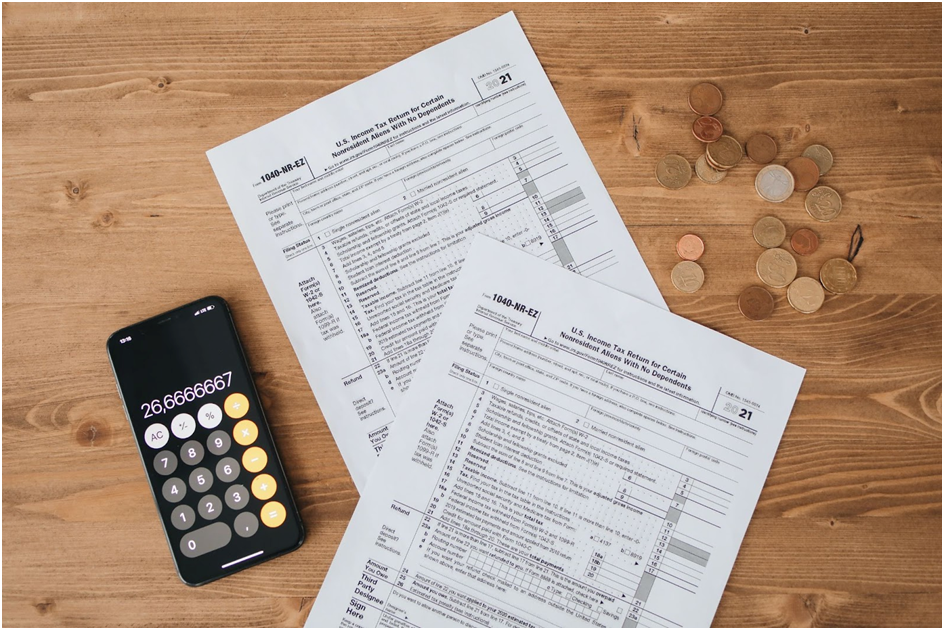
https://www.pexels.com/photo/a-papers-with-coins-and-mobile-phone-on-the-side-6927354/


The employer issues Form 16 Part A containing:

  • Name and address of the taxpayer

  • PAN and TAN of the employer

  • PAN and Reference Number of taxpayer

  • Financial year and period of employment

  • Total TDS deducted and deposited for the year


Form 16 Part B

This form contains detailed break-up of the tax amount as per the investment declarations made by you at the start of the financial year and document proofs submitted during ITR filing. The various components of Form 16 B are:


  • Basic salary details

  • Details about allowances

  • Information about tax deduction

  • Other income declared by employees and deductions against such income.

  • Employee’s net tax liability

  • Employer verification


 Difference between Form 16 A and Form 16 B 

Form 16 A is the TDS certificate issued for income other than salary, constituting accruals from returns against fixed deposit investment, mutual funds, gold bonds, and other forms of capital gain. Form 16 B, on the other hand, certifies tax that has been deducted from income accruing from the sale of immovable property (building or a part of it and land).


Who is eligible for Form 16?

The Ministry of Finance guidelines stipulate that any salaried individual whose tax is deducted by the employer is eligible to get Form 16. A company need not Issue Form 16 for employees whose salary is below the taxable limit. However, many companies issue the form even to employees outside of the tax bracket as it is a convenient way of providing consolidated information concerning employees' total earnings.


Advantages of Form 16, Form 16 A, and Form 16 B

Form 16 

  • Details contained in the form are required at the time of filing income tax returns.

  • It helps verify that the right amount of tax was deposited according to the information contained in the form.

  • Acts as proof where required.

  • It can be used when applying for loans as it is accepted as valid income proof in financial institutions.

  • Helps employers calculate the correct tax liability for the employee in question.

  • It is also required to obtain international visas to travel.


Form 16 A

  • The TDS and income data contained in Form 16 A assist taxpayers in filing their income tax returns and calculating the tax as applicable per their income.


Form 16 B

  • The form provides evidence that TDS has been deducted from the proceeds of a property sale by the buyer and duly deposited with the income tax department.


 How to download Form 16, Form 16 A, and Form 16B?


Form 16


Step 1- Go to http://www.incometaxindia.gov.in/Pages/tax-services/form-16A-download-deductor.aspx

Step 2 – Log in with your credentials.

Step 3 – Scroll to the Downloads Tab and select the "Income Tax Forms" option

Step 4 – There, you will find Form 16 with two options, 'PDF' and 'Fillable Form'

Step 5 – In the case of individual PANs, select the financial year for which Form 16 is needed, enter the PAN number, click on Add and hit enter to the go option,

Step 6 –  Finally, click on Submit to Download Form 16


Form 16 A

Step 1- Login to the TRACES website with a user ID (PAN) and password.


Step 2- Scroll to Downloads and click on Form 16 A.


Step 3- Enter the details and click on Go.


 Form 16 B 

Step 1- Log in to https://www.tdscpc.gov.in/app/tapreg1.xhtml

Step 2- Click on Register New User and complete the formalities. 

Step 3- Once the details are validated, you can create an account with your PAN as the user ID and a password of your choice. An automatically generated email will be sent with an activation link, and the second code will be texted to your registered mobile phone. To download Form 16 B, you need to scroll to download and click on ‘Request for Form 16 B,’ validate the details and submit the request. After some time, click on download and save it to your computer.


Tuesday, May 10, 2022

India needs to get on top of the energy situation.


Pexels photo by Pixabay

India needs to get on top of the energy situation if we are to seriously think of becoming the third-largest economy in the world and an engine of world economic growth. That means that we have to first of all sort out our supply chain issues with regard to coal that fires our thermal plants and secondly make a concerted move to renewable and alternative sources of energy on an ASAP basis. In this regard, the prime minister's push to make Indian an energy independent country by 2047 has not come a moment too soon.


The current oil crisis brought upon the world by the Ukraine conflict has stressed most of the economies globally, save that of the United States which is sitting pretty because it has achieved near total self-sufficiency in its energy needs and can afford to play hardball with Russia the way that it is. With climate change issues and the Paris accord obligations making thermal energy not much of a long term solution, India needs to expedite the move to renewables. At the same time, there has to be a move away from oil to natural gas as well as a focus on using petrol that has been blended with 20% of ethanol so as to progressively reduce the reliance on imported oil. The rapid adoption of electric mobility is an integral part of the move away from fossil fuel and towards an environmentally friendly long term power generation policy and has to be given the utmost priority as well.

India has the resources and the wherewithal to pull it off given that it gets so much sun to help aid solar power generation, has a vast landmass and a very long coastline to support wind-generated power, an enviable network of rivers to tap for hydel electricity and the ability to produce power with the help of thorium-based nuclear reactors. The sooner the energy situation is dealt with the sooner will India attain its position amongst the top few nations of the world.

Monday, March 28, 2022

What is green cloud computing?

Pexels Photo by Luis del Rio


We live in fraught times where a degraded environment has become an existential problem for the whole world. This has prompted an across-the-board clean up in the way that mankind goes about the business of living. Everything from the way we travel and pursue our livelihoods to how we eat and entertain ourselves is seeing a paradigm redefining move towards a more ecologically sustainable way of doing things.

That includes even something like cloud computing-something one would never imagine has anything to do with the environment, but apparently, it does. The fact of the matter is that with an exponential rise in the demand for cloud architecture across enterprises, there has been a huge surge in energy consumption emanating from a large number of data centers and servers required to support this. 

It is, therefore, essential that efficiency in the use of energy resources be incorporated into the cloud computing process. That is what green cloud computing is all about.  We could define it as the process by which one devises the use of digital spaces in a manner that has minimal impact on the environment.

How organizations can achieve green cloud computing


Plan for it

Green cloud computing will not occur in a vacuum. Organizations need to come up with a green computing plan. This requires them to look at elements like power management by way of using a green algorithm that significantly reduces power consumption at cloud computing data centers. Another thing that one can look at is virtualization-using multiple operating systems running simultaneously on a computer system. This use of common servers and terminals can result in a substantial reduction in energy consumption.

Among other things that an organization can do to facilitate green cloud computing is to go for a cloud service that uses an eco-friendly model for data storage and backup. An integral part of any green cloud computing initiative has to be a green data center that makes use of technologies that are energy efficient. They will make sure to work with systems that are up to date with regard to data storage and management.

That apart, an organization would do well to choose equipment that is certified for energy efficiency. All in all, it is important that any organization looking at implementing green cloud computing should ensure that they use the available resources optimally, leverage virtualization and manage power consumption optimally.

Why Green Cloud Computing


Green cloud computing provides benefits on several levels including environment, efficiency and cost saving.  Taking the environmental factor first, using cloud computing has a huge salutary impact in the shape of a reduced carbon footprint on account of more efficient use of energy and the enabling of paperless working.  From the point of view of cost saving, green cloud computing is driven by efficient use of resources driving down costs for consumers and improving customer service. That apart, green cloud computing brings down the cost of operations on account of lower energy bills, which benefit too can be passed on to the customer. Another benefit that accrues to consumers on account of green cloud computing is the fact that it can be used as a pay as you go service that is scalable and very market-orientated.

Conclusion


The need for green cloud computing is only going to grow as time progresses on account of the fact that the kind of energy needed to power data centers is increasing exponentially. Not addressing the issue will lead to a phenomenal increase in the amount of greenhouse gas emissions and the best way to do so is by implementing green cloud computing. This is something that has to be done in light of not just the Paris Climate Accord obligations, but a growing realization that things will not continue the same old way.

The growing importance and indeed the urgency surrounding the need for green cloud computing also presents a great business opportunity to many. It lets organizations easily scale up and down in accordance with the demand. This helps them reduce idle time with regard to energy consumption in a major way. The benefits of adopting green cloud computing help organizations in terms of not just money savings, but also better customer experience, retention of employees, faster development and of course, reduced greenhouse emissions-a winner all the way.

Sunday, February 27, 2022

The Impact of War on Ukraine's Technology Industry


Pexels photo by Katie Godowski


The invasion of Ukraine took the world by surprise, even though there were indications galore that Putin's Russia would do just that. Now that the invasion has taken place and the Ukrainians are standing up to the aggressor with unprecedented bravery against impossible odds, the world is finally waking up in trying to figure out how to deal with the emerging situation. There is an overwhelming realization that a message needs to be unequivocally sent that no nation in the world can feel that it is to their advantage to invade another country with the intention of occupying it. 

While the world learns to come up with the right kind of strategy to not only try and roll back the advance of the Russian armed forces into Ukraine but to ensure that it never happens again, the Ukrainians are fighting for their right to exist on the streets of its cities. The human suffering apart, one of the many casualties of any war is the livelihoods and economy of a nation. Ukraine, which had a booming technology industry has seen it come under siege with the Ukrainian government departments being subject to data wiping malware in the lead up to the actual armed attack.

But the real impact of the invasion has likely been crippling across the entire technology ecosystem of the country that encompasses a host of startups, large-sized technology firms and a large number of R&D setups representing the iconic technology brands of the world. Like India, Ukraine is a major technology outsourcing destination and this sector has been booming in the country with cities like Kyiv, Dnipro, Lviv and Kharpov leading the way in driving the growth. In fact, IT industry exports grew by as much as 20.4% in 2020 (the pandemic year) to cross a figure of $20 billion.

With internet outages becoming the norm, it is becoming increasingly difficult for the large number of companies providing technology services backup to the banking, insurance and financial services companies in the U.S. and Europe to continue doing so. One can imagine the financial distress that will be caused by the sudden folding up of a sector that employs 85000 to 100000 people. With many of the major global businesses looking at relocating their employees to relatively safer locations within Ukraine, how the situation eventually pans out depends upon how long the conflict drags on and in what manner it gets resolved.