
Tuesday, July 7, 2020

Thursday, March 12, 2020
Sunday, January 12, 2020
Wednesday, January 8, 2020
How I made over $20,000 on Upwork.

Many freelancers think that it is not really possible to make money by working for clients signed on Upwork. I regularly use Upwork as part of my business creation effort and have found it a fairly useful tool. With over $20,000 as earnings, I figured I could offer some advice on how others could leverage its power.

1. Create an Effective Profile-
It is important for you to showcase your skills well so that the prospective clients know what exactly it is that you offer. It is therefore imperative that you create a profile that highlights what it is that you bring to the table. You may also want to upload a video introduction, considering that clients often want to see who they are hiring. If they see you make your case clearly and forcefully, they may become inclined to hire you.
2. Don't Focus Too Much on the Rates Initially-
If you are just starting off on Upwork, you will need to prove your worth by successfully completing a few projects first. For a beginner, it makes eminent sense to not focus too much on what you are being paid, so as to start building a reputation of a dependable freelancer who is rated well by his or her clients. You may start as low as $8 an hour to start with. This will ensure that you get the initial few gigs that will help you find your feet.
Once you have completed a fair number of assignments and proved your worth as somebody who is an expert at what you do, you can hike your charges to as high as $30 an hour or more.
3. Always Leave a Positive Feedback for Your Clients-
Make it a point to leave a great feedback for your clients, even if you are not entirely happy with the way that the client conducted himself or herself. This is important for two reasons. Firstly, your chances of obtaining a great feedback from a client increases when you do that. Secondly giving vent to your frustrations with a client by giving them a poor feedback will not only invite a retaliation from the client, but it will also make other prospective clients wary of hiring you.
4. Sign Up For Both Hourly and Fixed Price Projects-
You may initially want to sign up for more hourly projects, as the payment is automatically credited to your name on a weekly basis and you don't have to fret about delays. Once you have a few hourly projects under your belt, you could consider fixed priced projects as well. These offer you greater flexibility of time and you are not constrained to work certain fixed hours. If you are a bit chary about getting your payment after you have completed and submitted the payment, you can choose to set milestones. This also allows you to ask for an advance.

5. Try and Make It To The Top Rated Ranking-
Earning a top rated ranking, displayed as a badge on your profile page is a status you should try and obtain at the earliest. You can earn this by signing multiple clients and delivering top notch work and always complying with the Upwork terms of service. Once you have achieved this status you will find it easier and easier to bag bigger and more lucrative assignments. You will also start getting job invites from Upwork on account of your top rated status.

6. Choose the Right Jobs-
Prospective clients are most attracted to those Upwork freelancers who have specialist skills. You should endeavor to take up more of a certain type of assignments that would portray you as someone who specializes in that field. For instance a writer may specialize in writing white papers and research reports while a technology specialist might want to focus on a certain skill like Node JS.
There is no point in applying to random jobs you may not be very good at and sullying your fair name. You should also be wary of working for clients who don't appear to be above board. It makes sense for you to always study the profile of the clients before applying. Look at the volume of payments they have made and the kind of rating they have received from the people they employed to work for them.
7. Make a Killer Proposal-
The kind of proposal you make and send to prospective clients can make or mar your chances of landing an assignment. Spend some time in understanding the client's requirements and showcase your skills in a manner that perfectly gel with the client's expectations for the job.
Make sure to attach samples of prior work that can buttress the claims that you made in your proposal. Above all never use a common template when applying for job assignments.
Tuesday, October 1, 2019
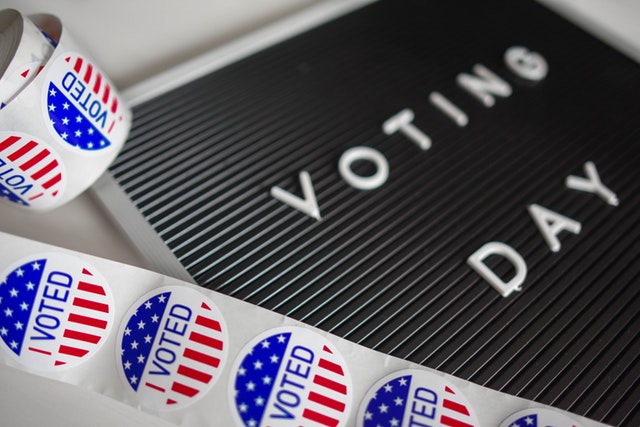
Investment In The Run Up To The U.S. Presidential Elections 2020
As one approaches what is
undoubtedly going to be a bitterly contested and cantankerous American
election, what is the stock market's take going to be? Every four years, the impending approach of the presidential election sets off speculation and
tongues wagging about all sorts of matters including which way the investor
sentiment is going to swing during the competing political campaigns.
What do past trends show?
Interestingly, when you study the
S&P 500 Index for election years since 1928 years, there have been three
occasions when investments have shown a negative return. The returns obtained
in an election year closely mimic those of the S&P 500 long term returns.
The S&P 500 return during the
election years between 1928 to 2013 has averaged 11.2%. While this trend is
indicative of a pattern, it is not something that would be playing on an
investor's mind while making decisions about where to invest in an election
year.

Should the election year have any bearing on investment decisions?
The election year is a time when
emotions run high, especially in these digital times. Should one get swayed by
the euphoria expressed by some or dismal doomsday pictures presented by others
and temper one's investment decisions accordingly? Well, not really, as any
decision, especially one involving investment should be based upon what one's
long term goals are and one's ability to bear the risk.
This holds notwithstanding which
candidate one supports for President and who ends up in the White House after
the election.
Impact of election year on industry
One cannot deny the possibility of
the impact of election-year uncertainty on industry and this is especially true
of commercial real estate. Investors in this segment are inclined to adopt a
wait and watch attitude in this period in time and are therefore not too keen
on making any substantial investment commitments.
That being stated, the primary
presidential candidates can influence the economy in the election year, in that
their purported policy statements can impact the stock market and liquidity.
Investors do get affected by the kind of news that they get to see or hear
about what directions these candidates want to point public policy in.
What happens when there is no
outright presidential front-runner
In the above scenario, one can
probably look at market volatility. A sitting president not looking likely to
get reelected can cause some amount of uncertainty in the capital market. That
happens on account of the possibility of a break in government policies. Some
40% of investors made changes to their investment portfolio in light of the
run-up to the 2020 presidential elections as per the RBC Capital Markets Survey
report released back in April.
That being stated investors seem
pretty inured to political goings-on. This is evidenced by the stock market
shrugging off reports of the whistleblowing complaint against Trump or even the
possibility of impeachment proceedings being initiated against the president.
Investors are if anything hard-nosed realists who look beyond the charged
atmosphere and din surrounding a presidential election.
Conclusion
Every four years there is a great
deal of excitement surrounding the run-up to the presidential elections and the
stock market is no exception. While past trends may have shown an 11.2% rate of
return during the year of a presidential election, this is not going to weigh
heavily on the minds of investors.
All the hoopla surrounding the
presidential elections shouldn't have any profound bearing on one's investment
decisions, given that these are always based upon a sound long term strategy
and the capacity to bear the risk. One cannot deny an impact on industries like
commercial real estate where an abundant sense of caution is witnessed during
the presidential election year.
There may be some impact on account
of concerns regarding continuity in policy, particularly if the sitting
president is not sure to be reelected, but overall investors are not given to
rocking the boat unless something really dramatic happens. All in all, there
may be a bit of a kerfuffle from time to time, but not much drama on the U.S. stock
markets on account of the presidential election.
Subscribe to:
Posts (Atom)